Add Traction When Ice Won't Melt
Sanding services in Chittenden County, Castleton, and across Vermont, for icy driveways, roadways, and high-traffic areas.
When temperatures in Chittenden County, Castleton, and across Vermont, drop below fifteen degrees, salt stops working and ice stays frozen no matter how much you apply. Sanding solves that problem by spreading coarse sand over icy surfaces to create friction, which helps tires grip and prevents pedestrians from slipping on areas that would otherwise be glass-smooth.
John Trombley Construction provides sanding for steep driveways, rural roadways, and high-traffic zones where ice persists through extreme cold or where packed snow has turned into a hard, slick layer. The service is often combined with plowing and snow removal, and it works in conditions where chemical de-icers are ineffective or impractical.
If your property in Lake George, Glens Falls, or Warrensburg, NY, has ice that won't melt or steep areas that need better traction, get in touch to discuss sanding options.
How Sanding Improves Traction Without Melting
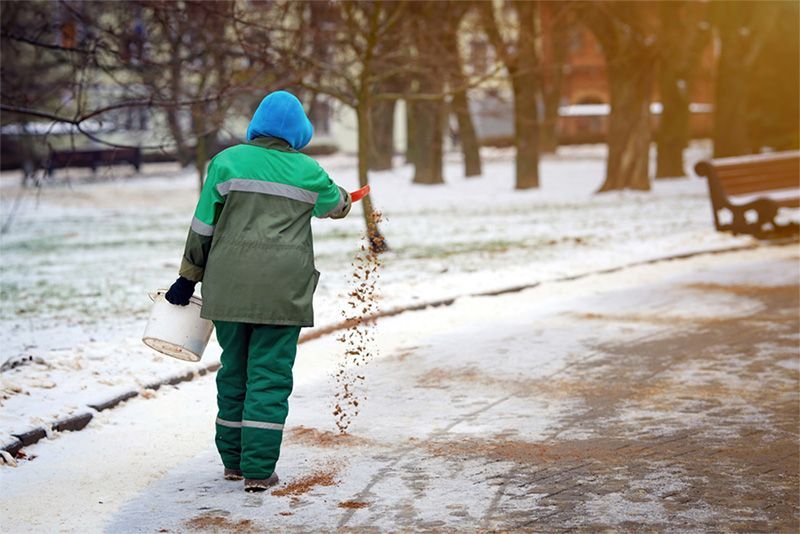
Sanding in Lake George, Glens Falls, Warrensburg, NY, Chittenden County, Castleton, and across Vermont, involves spreading coarse sand or sand-salt mixtures across icy pavement using a truck-mounted spreader, with heavier application on slopes, curves, and intersections where loss of traction causes the most problems. The sand embeds slightly into the ice and provides a gritty surface that tires and shoes can grip.
Once sanding is complete, you'll notice that tires stop spinning on inclines and footsteps feel steadier on walkways and driveways. The sand doesn't melt the ice, but it prevents vehicles from sliding backward and reduces the chance of falls on foot traffic routes.
Sanding works best on packed snow or ice that has formed a hard surface, and it's commonly used on rural roads, municipal streets, and residential properties with limited sun exposure or steep grades. The sand remains effective until it gets plowed away or buried by new snow.
Homeowners and site managers in Lake George, Glens Falls, Warrensburg, NY, Chittenden County, Castleton, and across Vermont, often ask when sanding is the right choice, how it compares to salting, and what happens to the sand after temperatures rise.
What Property Owners Need to Know
If your property in Castleton has ice that won't respond to salt or steep areas where traction is a constant problem during cold snaps, John Trombley Construction can apply sand to keep driveways, roads, and walkways safer throughout the winter. Contact us to arrange sanding as part of your snow service plan.